How-To: Export your Cloud PKI Logs to CrowdStrike Falcon
Prerequisites
How To Export Your Cloud PKI Audit Logs To CrowdStrike Falcon LogScale
-
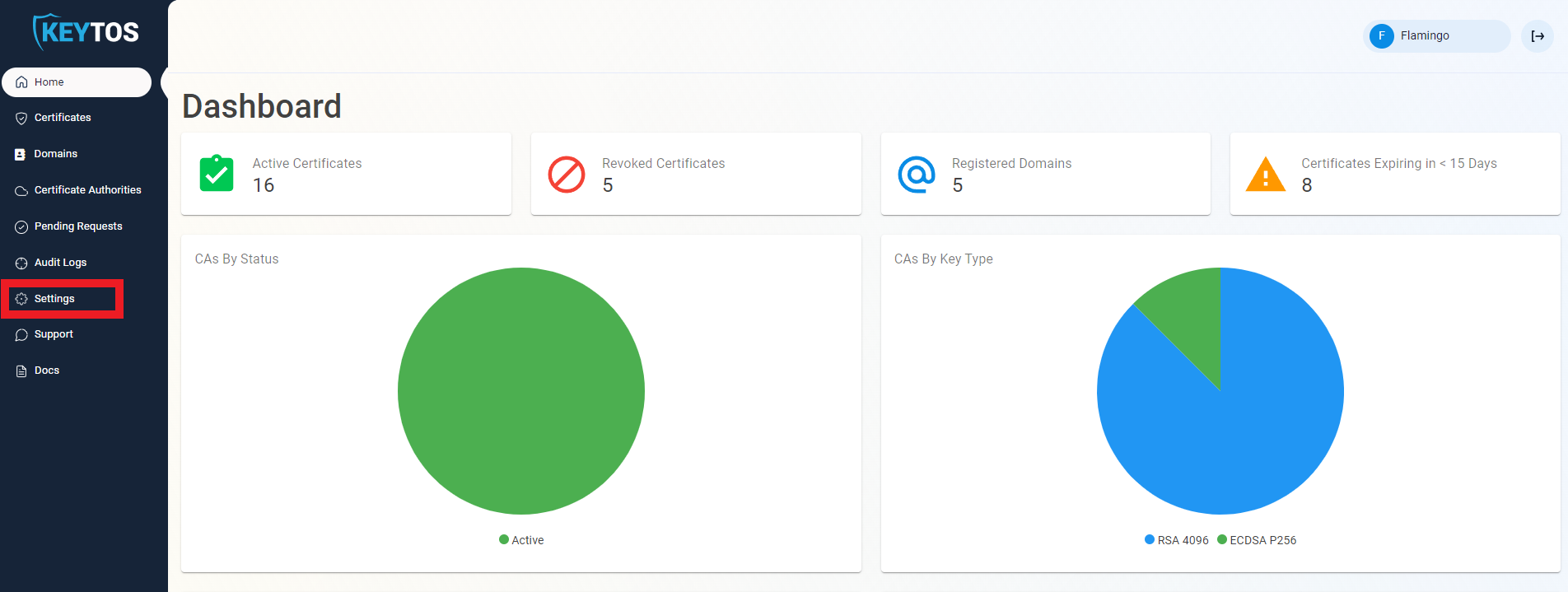
Go to the EZCA Portal.
-
Click on Settings.
-
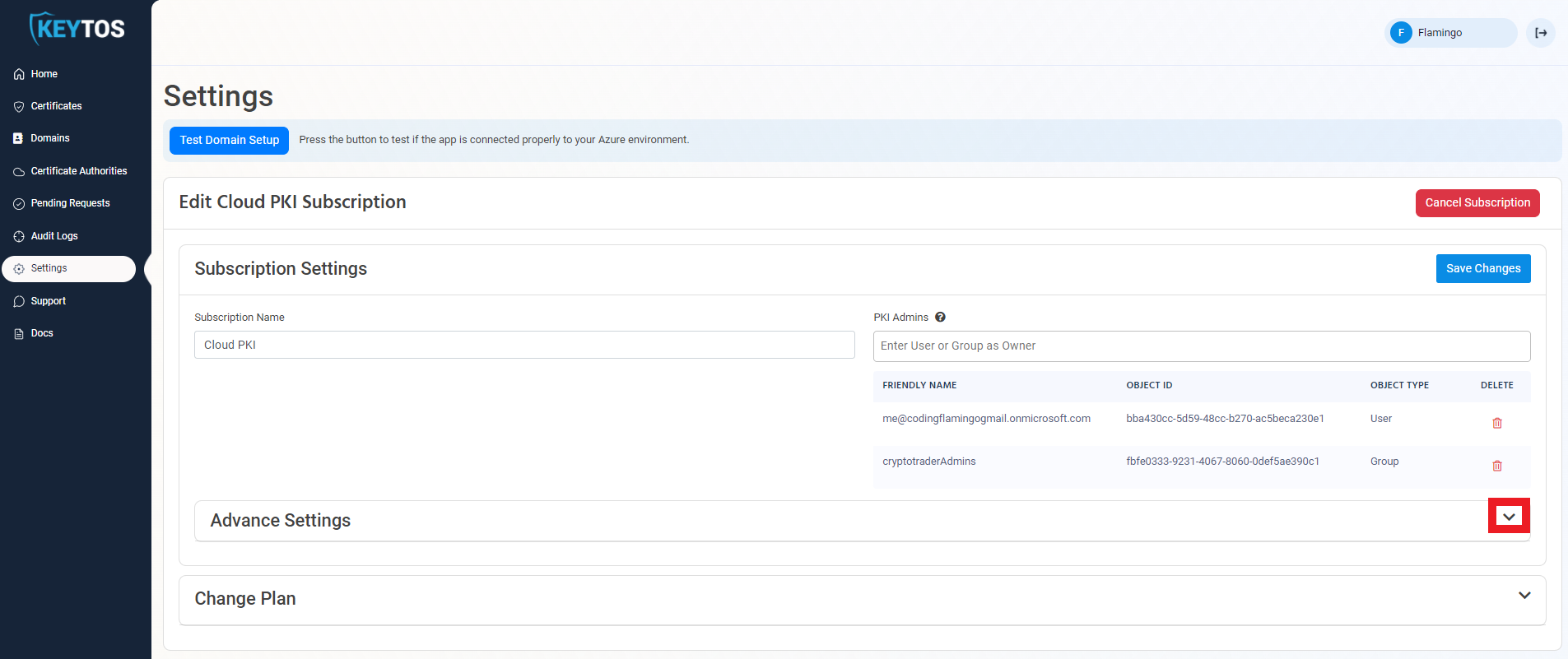
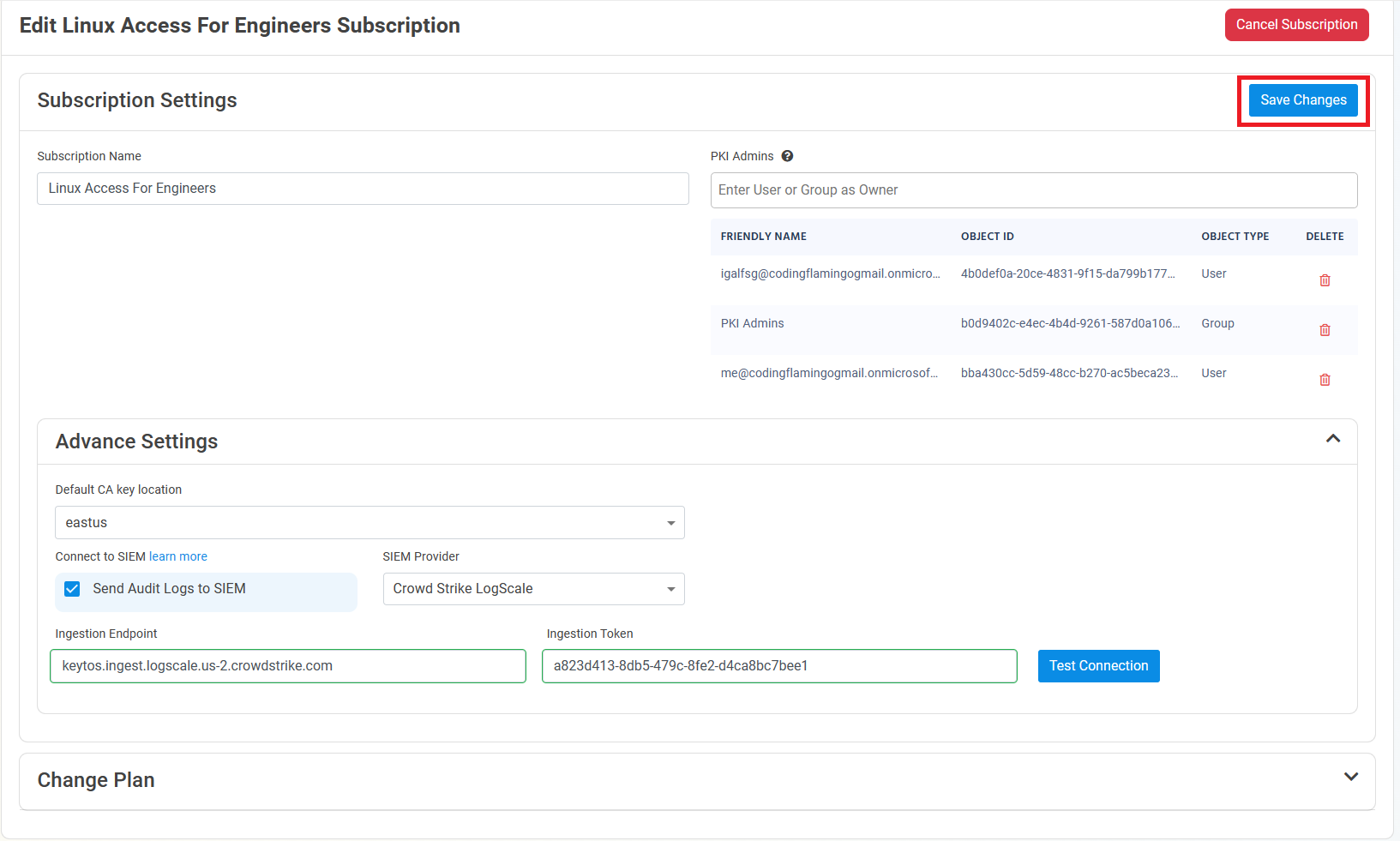
Expand your subscription’s advanced settings.
-
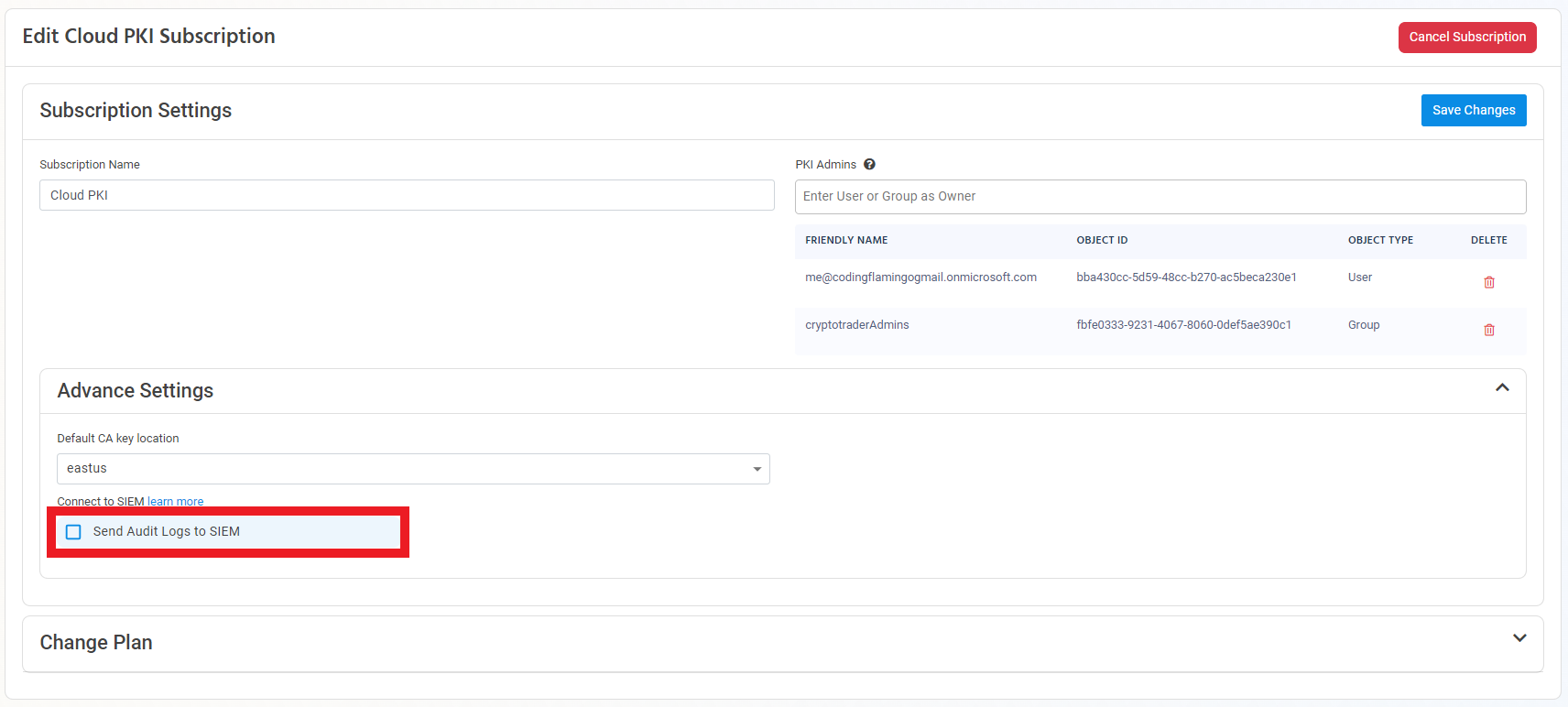
Enable the Send Audit Logs to SIEM option.
-
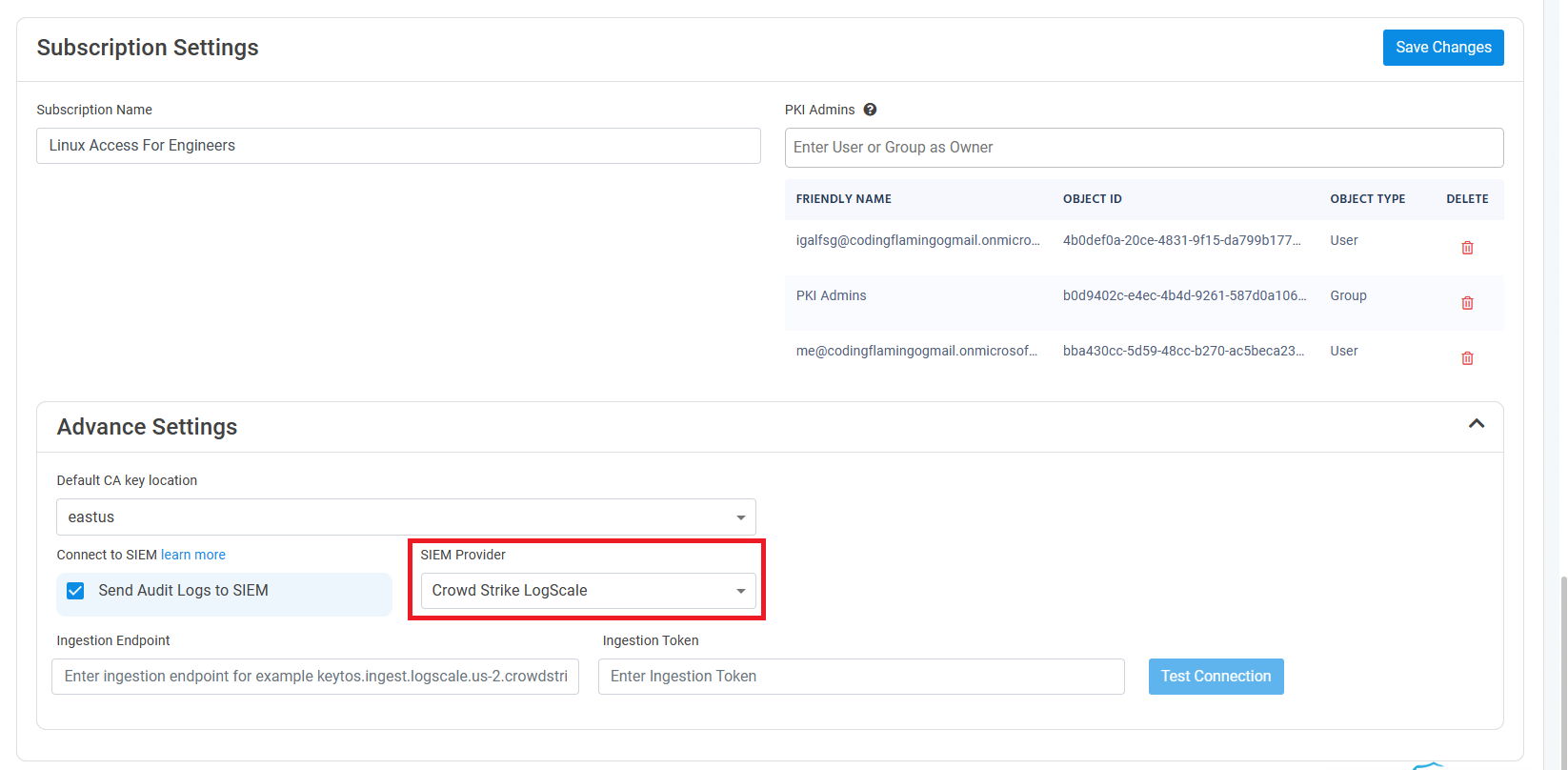
Select CrowdStrike Falcon LogScale as the SIEM Provider.
-
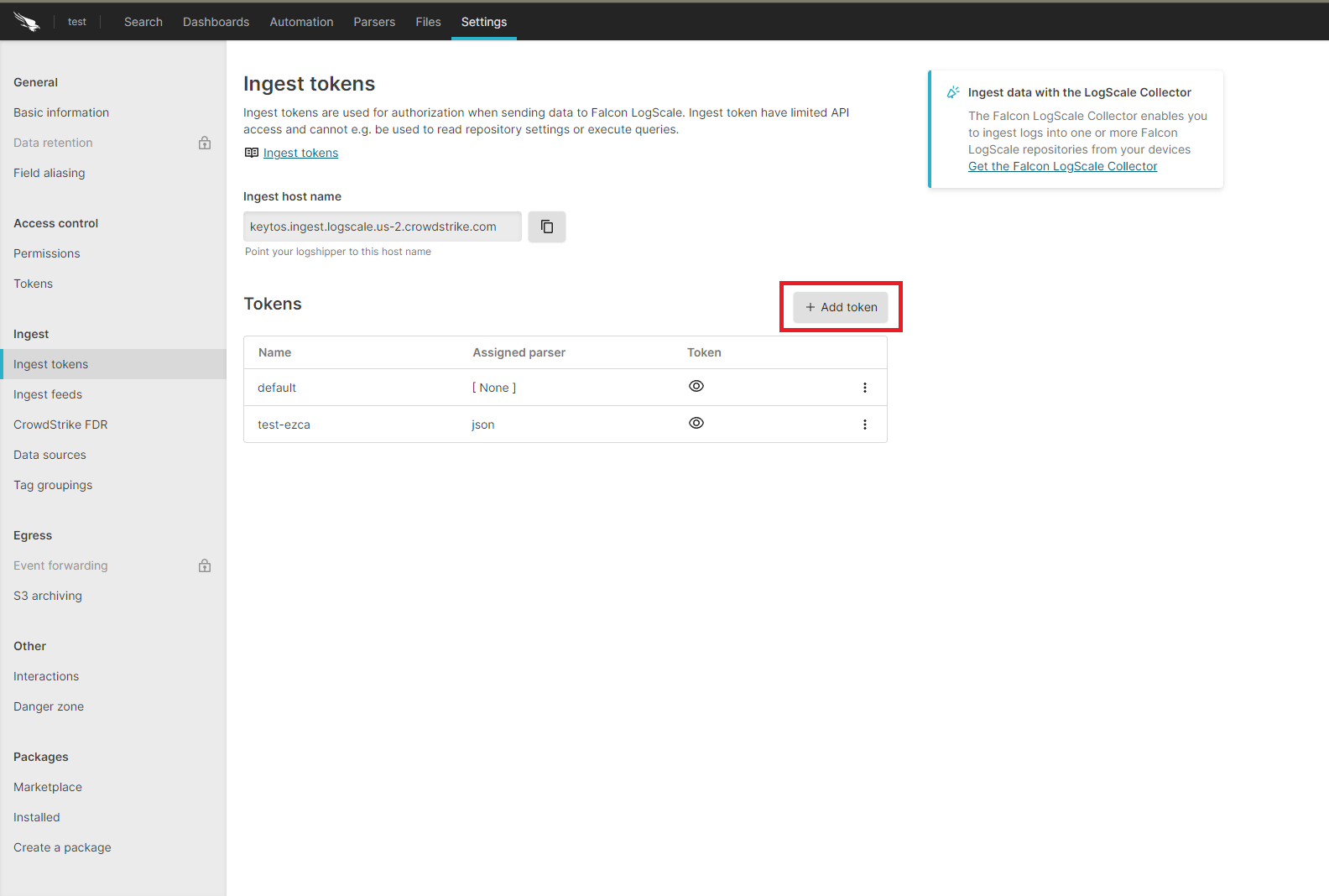
In another tab, go to your CrowdStrike Falcon LogScale instance.
-
Click on the Settings tab.
-
Select the Ingest Tokens menu.
-
Click on the Add Token button.
-
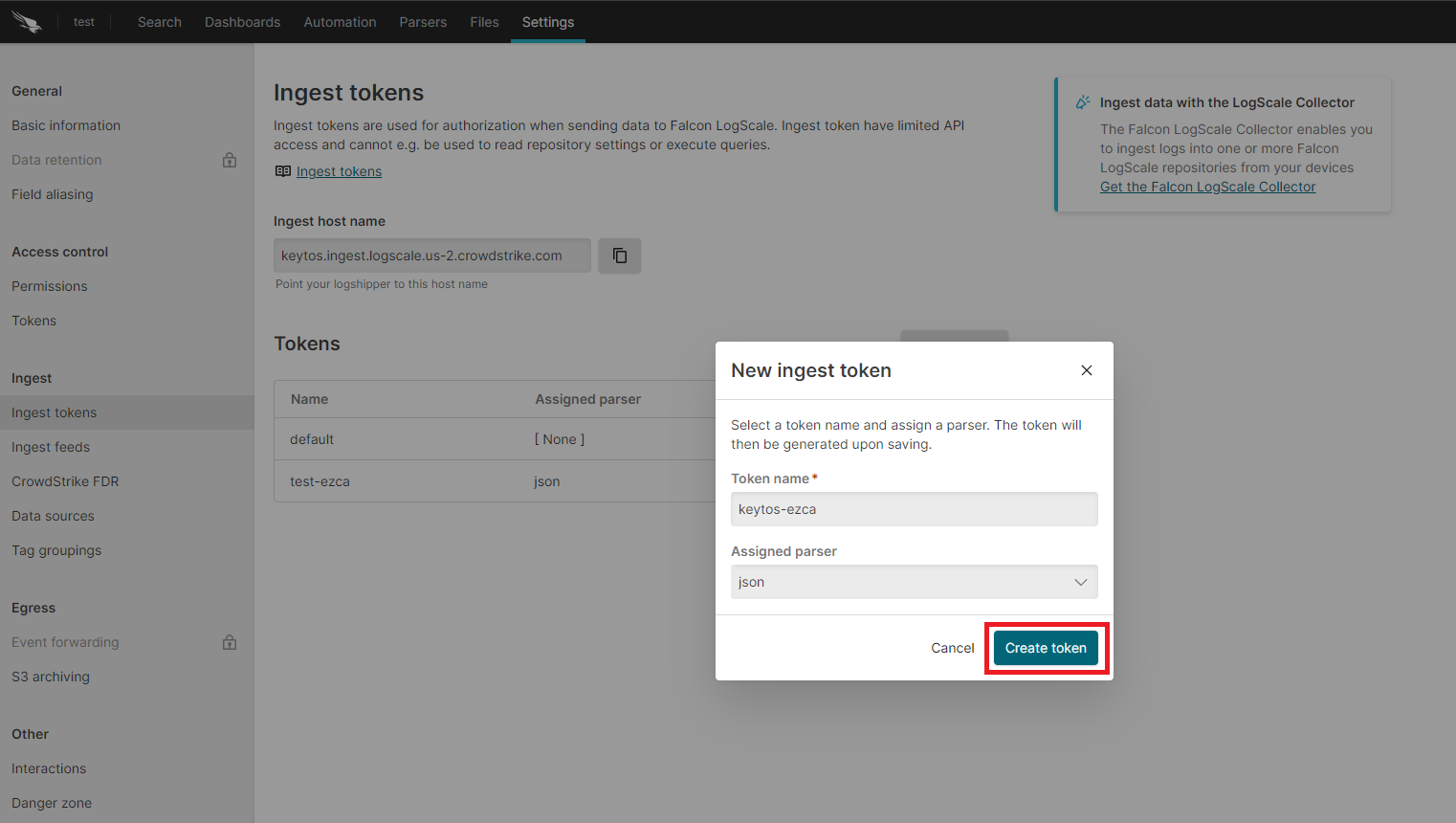
Enter the token name
-
Assign the json parser and click Create
-
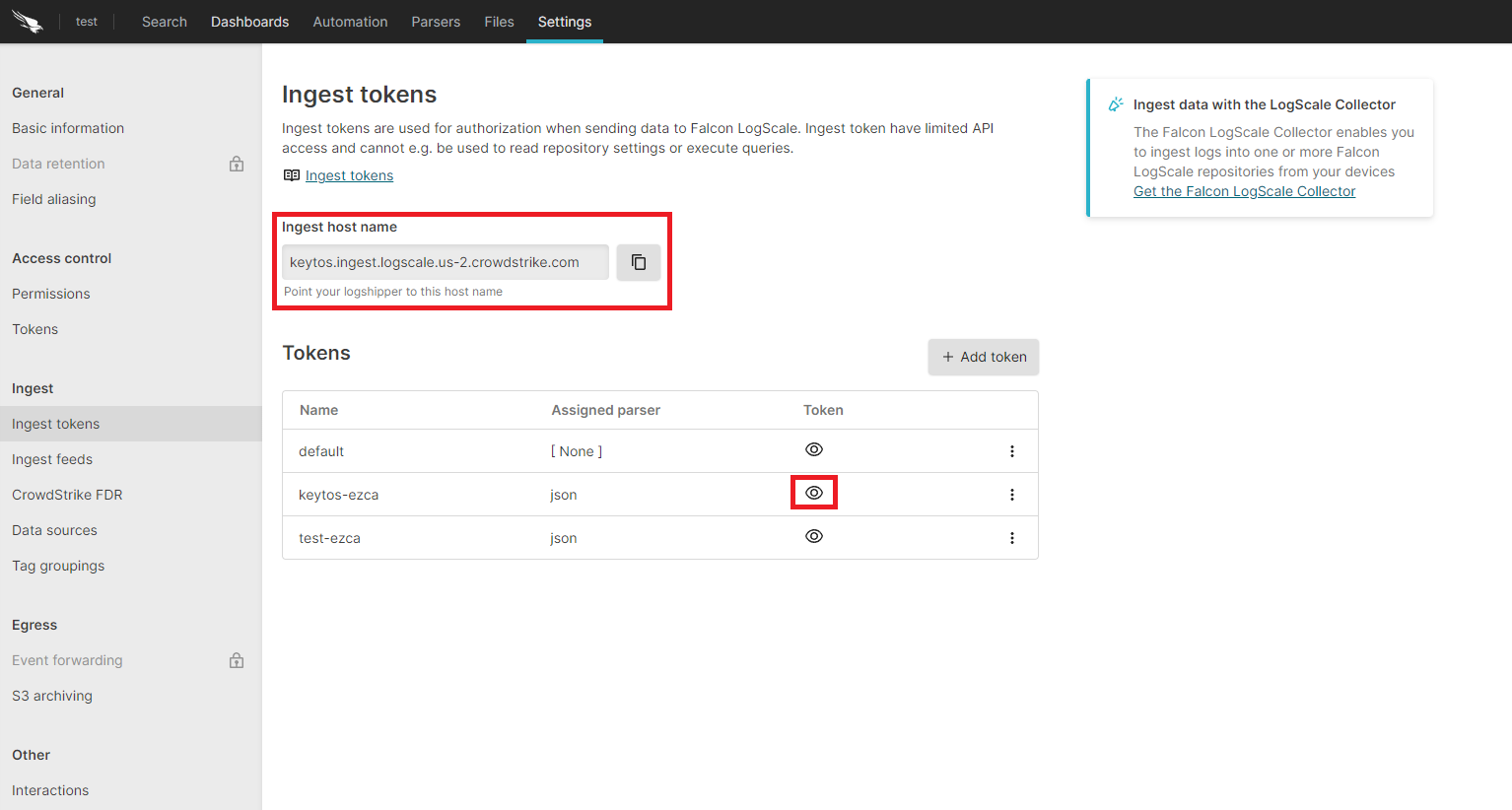
Copy the token and the ingest host name.
-
Go back to the EZCA tab.
-
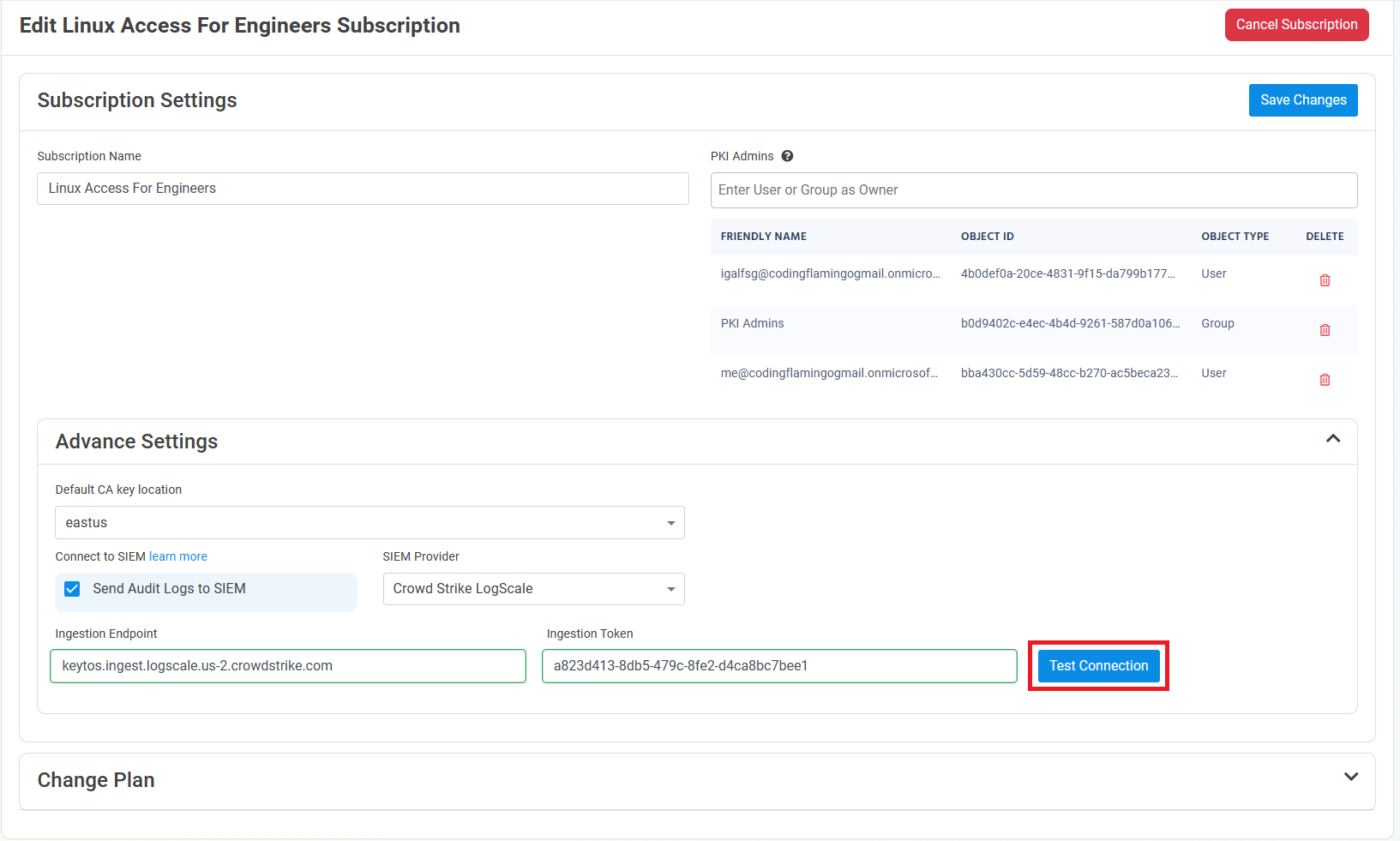
Paste the ingest host name in the Ingestion Endpoint field.
-
Paste the token in the Ingestion Token field.
-
Click the Test Connection button, this will create a test log in your SIEM to make sure EZCA can write to the SIEM.
-
If the connection test is successful, click Save changes
How To Create Alerts in CrowdStrike Falcon LogScale to Monitor Your Cloud PKI Activity
We recommend setting up alerts for any high criticality event, and closely monitor medium and low events. Here are some example queries to get you started:
Certificate Request Denied (Event ID 4888)
Certificate request denied is an event that is created when a user requests a certificate that they do not have permission to request. It is important to alert on this event since it can be an attacker attempting to escalate privileges by requesting a certificate.
LogType = "EZCA_Certificates" and EventID = 4888
CA Permission Changed (Event ID 4882)
CA Permission Changed is an event that is created when a user changes the security permissions for a CA. This event should be monitored since it is a low frequency high impact action that could indicate a compromise to your PKI administrator’s accounts.
LogType = "EZCA_CAs" and EventID = 4882
CA Changes Denied (Event ID 92)
CA Permission Denied is an event that is created when a user attempts to change the security permissions for a CA without having the proper security permissions. It is important to alert on this event since it can be an attacker attempting to escalate privileges by changing the security configuration of your certificate authority.
LogType = "EZCA_CAs" and EventID = 92
Deleted CA (Event ID 19)
CA Deleted is an event that is created when a user deletes a CA. This event should be monitored since it is a low frequency high impact action that could indicate a compromise to your PKI administrator’s accounts.
LogType = "EZCA_CAs" and EventID = 19
What Logs are Sent to CrowdStrike Falcon?
EZCA sends the following log types to your SIEM:
CA Operation Events
| Event ID | Event Summary | Description | Potential Criticality |
|---|---|---|---|
| 4882 | The security permissions for Certificate Services changed | A change in CA settings that might give or remove critical permissions | High |
| 92 | CA change denied due to insufficient permissions | A user attempted to change CA settings without the proper permissions | High |
| 23 | Intermediate CA request rejected | A new Intermediate CA request has been rejected | High |
| 19 | CA deleted | This indicates that a CA was deleted | High |
| 28 | Intermediate CA was imported | A new Intermediate CA has been created chaining to an external CA | Medium |
| 22 | Intermediate CA created with EZCA Root | A new Intermediate CA has been created chaining to an EZCA CA | Medium |
| 12 | CA was renewed | A CA has been renewed | Low |
Certificate Operation Events
| Event ID | Event Summary | Description | Potential Criticality |
|---|---|---|---|
| 4888 | Certificate request denied due to insufficient permissions | A user attempted to request a certificate without the proper permissions | High |
| 4870 | A certificate has been revoked | This can cause an outage if was done by mistake or the new certificate is not added to all the endpoints that use the certificate | Medium |
| 4872 | Publish CRL | This is an even that the CRL has been published, this does not have to be tracked as we take care of it for you. | Low |
| 4887 | Certificate was created | This event indicates a certificate was created successfully | Low |